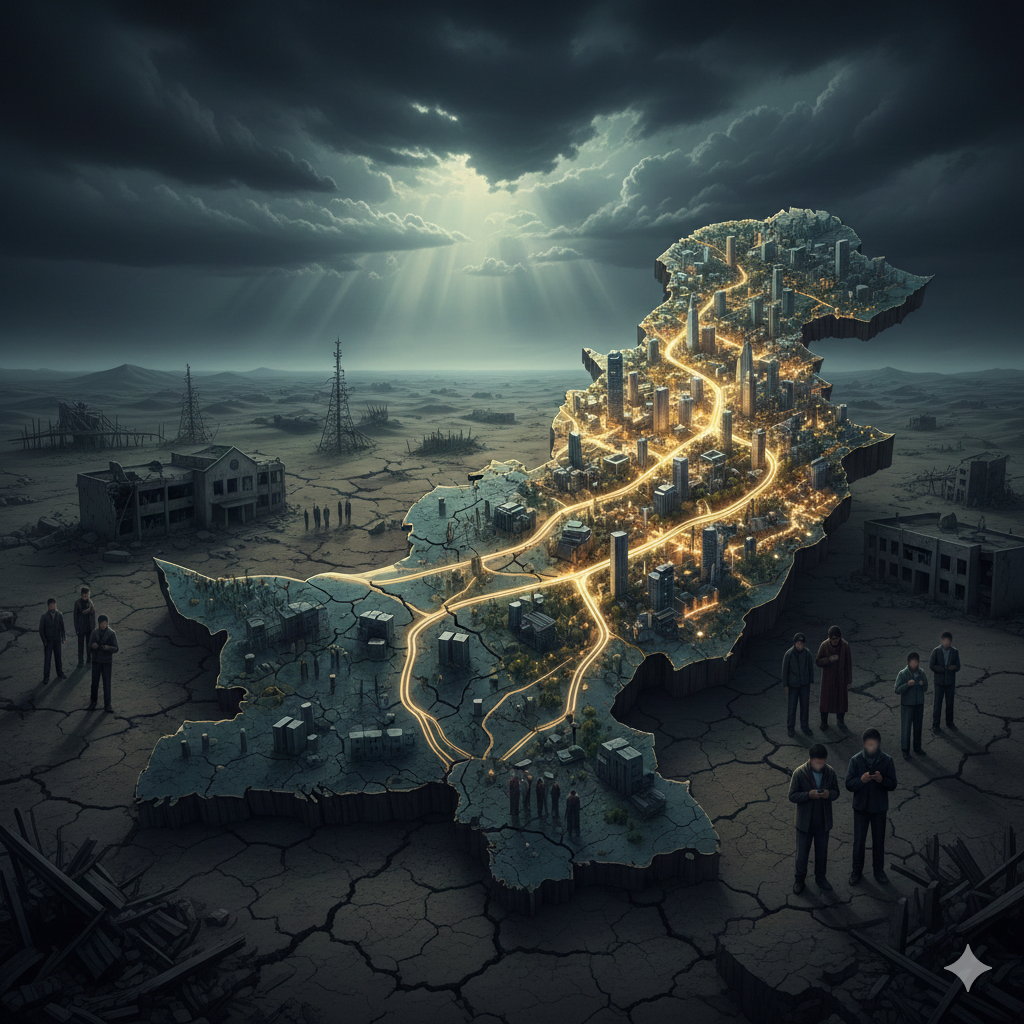

It is often said that the real system of any country does not begin with its government, but with its people. The question, then, is this: how did a nation that stood shoulder to shoulder with Muhammad Ali Jinnah, sacrificing countless lives to secure an independent homeland in the Subcontinent, fail to protect and sustain that very state?
The blood running through our veins today is the same blood that flowed a century ago. So where did the difference come from?
We have become so deeply entangled in internal conflicts that if British rule were to attempt a return today, there is little doubt that this so-called Islamic state would collapse from within. History is unforgiving to nations whose people forget the principles and vision of their founders. That outcome is inevitable.
However, the purpose of writing this article is not to shake the reader with slogans that many before me have already exhausted in patience and despair. The harsh reality is that we are willing to gather in the thousands, humiliating ourselves just to catch a glimpse of a TikToker, yet we cannot unite to demand our fundamental rights.
We take pride in calling ourselves patriots, but when someone criticizes our country, we immediately resort to abusive language and memes, proudly displaying our lack of moral training. Why should anyone refrain from criticizing this country? Often, the criticism is justified.
And this discussion is not even about foreign voices.
Look at our own provinces—Balochistan and Khyber Pakhtunkhwa. Their condition is in front of us. The resentment that exists there is not born out of hatred for Pakistan itself, but from decades of deprivation and neglect. These regions are rich in natural resources and have contributed significantly to the federation, yet they remain deprived of basic necessities such as education, healthcare, clean water, and infrastructure.
When people there express frustration or even say they feel closer to Afghanistan, it should not be dismissed as treason without understanding the root causes. It is a fact that despite contributing resources and bearing heavy economic burdens, these provinces have historically received disproportionately fewer developmental benefits. Their voices, whenever raised for legitimate rights, have often been suppressed instead of being heard.
This leads to an uncomfortable but necessary question: does Pakistan belong only to Punjab?
If the survival of the state depends solely on one province, then the federation has already failed in spirit. When people from marginalized regions need solidarity, we sit comfortably in our homes, phones in hand, abusing them and labeling them as traitors or separatists. Yet a country does not collapse merely because borders are challenged. It collapses when its people are divided, alienated, and weakened from within.
Calling fellow citizens “country-breakers” while ignoring the injustices inflicted upon them is nothing but moral cowardice.
And if this mindset—of denial, arrogance, and selective patriotism—is what being “Punjabi” means, then I refuse to be identified by it.